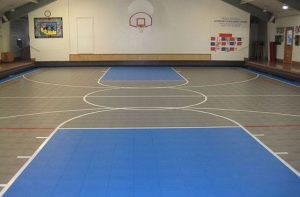
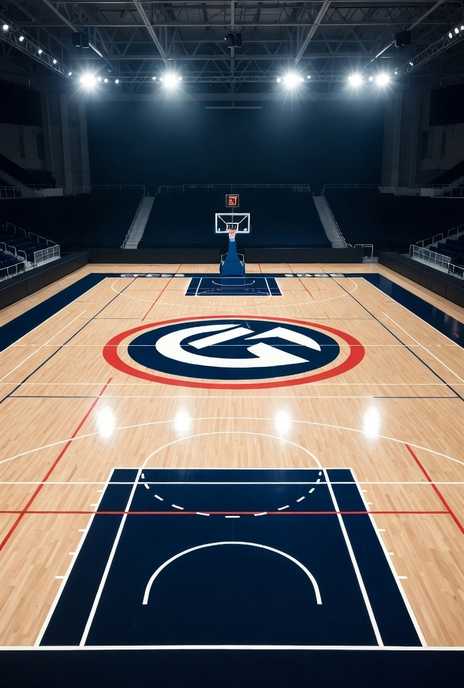
When people picture a gymnasium floor, they often imagine a basketball court with logos painted at center court. A center-court feature can make a visual statement, but it is only part of what is possible with gym graphics.
From bold school mascots, colorful lettering, and perimeter graphics, to motivational messages, gym floor graphics define identity.
Today, logos on gym floor graphics reflect the community’s pride and personality.
The gym may belong to a school, university, community center, private facility, or professional sports organization.
logos on the walls can make the space more distinctive while preserving its purpose: a safe, functional surface for sport.
Here are some creative ways to go beyond the traditional center-court logo.
1. Oversized School Mascots and Team Graphics
A school mascot is often one of the most recognizable elements of its identity. Incorporating that mascot into a gymnasium floor creates a visual connection between the school’s branding and its athletic programs.
Instead of placing a small emblem at center court, consider a larger, more detailed mascot design that incorporates the school’s colors, name, or distinctive visual features.
Popular ideas include:
- Large animal mascots, such as eagles, wolves, lions, and hawks.
- Stylized school initials incorporated into the mascot artwork.
- Bold team names positioned along the sidelines.
- Custom graphics that combine a mascot with geometric shapes or color accents.
- Secondary mascot graphics near the ends of the court.
The design should be developed with the court’s dimensions and playing lines in mind. Fine details that look impressive on a computer screen may become difficult to reproduce or recognize when painted onto a full-size gym floor.
A well-planned mascot graphic balances visual impact with clarity, ensuring the design remains recognizable from the bleachers and surrounding areas.
2. School Names and Large-Scale Lettering
Sometimes, typography can be just as powerful as a graphic logo.
Large school names, athletic department lettering, and team slogans can create a strong visual identity without requiring an elaborate illustration.
For example, a school might feature its name across the center of the court, incorporate its initials into a secondary design, or add bold lettering along a baseline.
Other possibilities include:
- School names integrated into center-court logos.
- University or college names displayed near the sidelines.
- Team nicknames incorporated into end-court graphics.
- Graduation-year or anniversary graphics for special occasions.
- Custom lettering that complements existing school branding.
Lettering can be designed in block, athletic, collegiate, or contemporary styles. The best choice depends on the institution’s identity and the overall appearance of the gymnasium.
Spacing and proportions are especially important. Large lettering must be easy to read without interfering with essential court markings or making the playing surface appear overcrowded.
3. Perimeter Graphics That Frame the Court
The center of the gym is not the only place where custom graphics can make an impression.
Perimeter graphics can frame the playing area and create a more complete, professionally designed appearance. These graphics may include school names, team colors, decorative bands, logos, or other visual elements that complement the main court design.
Possible applications include:
- Colored bands along selected perimeter areas.
- School names positioned outside the main playing area.
- Repeated mascot symbols or initials.
- Custom graphics near entrances to the gymnasium.
- Coordinated lettering along designated sidelines.
Perimeter designs can be particularly effective in larger gymnasiums where the surrounding floor area would otherwise appear plain.
However, these graphics should be planned carefully. The layout must account for required safety zones, equipment movement, access routes, and the dimensions of the playing area. Decorative elements should never compromise the usable court space or create confusing visual distractions.
4. Multi-Sport Line Painting With a Coordinated Color Scheme
Many school and community gymnasiums accommodate several sports on the same floor. Basketball, volleyball, badminton, pickleball, and other activities may all require separate court markings.
The challenge is not simply fitting every sport onto the floor. It is making the overall layout understandable.
A thoughtful color scheme can help distinguish one sport from another while creating a more organized appearance.
For example, a gym might use white for basketball markings, blue for volleyball, yellow for badminton, and a contrasting color for pickleball. The actual colors should be selected according to the existing floor finish, lighting conditions, visibility requirements, and the preferences of the facility.
A coordinated approach should consider:
- Clear differentiation between overlapping court lines.
- Consistent line colors throughout the gym.
- Appropriate contrast against the floor.
- Accurate court dimensions and layouts.
- The visual relationship between sport markings and decorative graphics.
The goal is to create a floor that supports several activities without becoming visually confusing.
Custom graphics can complement this system through strategically placed logos and lettering, but they should not compete with the lines athletes need to follow during play.
5. Custom Graphics for Volleyball and Basketball Programs
Facilities with strong basketball or volleyball programs may want their gym floors to reflect the importance of those sports.
For basketball, this might involve a prominent center-court logo, distinctive key-area colors where appropriate, or custom lettering near the baselines.
For volleyball, graphics might emphasize the school or club identity while maintaining a clear view of the court boundaries and attack lines.
Additional ideas include:
- Separate team identities for different school divisions.
- Graphics celebrating championship seasons.
- Custom designs for varsity or senior athletic programs.
- Commemorative graphics for tournament-hosting facilities.
- Coordinated branding across multiple courts within one building.
When a gym serves several teams or age groups, the design should be inclusive enough to represent the broader facility rather than making the floor feel exclusive to a single program.
6. Anniversary, Championship, and Hall-of-Fame Graphics
A gymnasium can be more than a place to play sports. For many schools and communities, it is also a place where important memories are made.
Custom floor graphics can recognize those memories through commemorative designs.
Examples include a school anniversary, a championship-winning team, a milestone season, or a tribute to a long-standing athletic program.
Possible concepts include:
- A school anniversary year incorporated into the center-court design.
- A championship emblem integrated into a team logo.
- A commemorative graphic celebrating a historic season.
- A tribute to a founding year or significant institutional milestone.
- A special tournament logo for a recurring athletic event.
These designs can give a gymnasium a stronger sense of history and community.
Before incorporating a commemorative graphic, consider how long it is intended to remain in place. A permanent anniversary design should still make sense years later, while a temporary event graphic may be better suited to a removable display or another location.
The artwork should also be evaluated for compatibility with the existing floor coating and the planned maintenance schedule.
7. Motivational Messages and Athletic Values
Words can contribute to the identity of a sports facility just as effectively as logos.
A short phrase reflecting teamwork, perseverance, sportsmanship, or school pride can add meaning to a gymnasium’s design.
Potential themes include:
- Teamwork and cooperation.
- Respect for teammates and opponents.
- School pride and community spirit.
- Dedication and personal improvement.
- Leadership and sportsmanship.
The most effective messages are usually brief and visually clear. A short phrase integrated into an existing design is generally more successful than filling the floor with large amounts of text.
Placement is equally important. A motivational message should be positioned where it can be seen without interfering with play, creating distractions, or making the court markings harder to distinguish.
For many facilities, a wall graphic or entrance display may be a better choice for longer messages, while the floor remains focused on a small number of carefully selected visual elements.
8. Graphics That Connect Multiple Courts
Large recreation centers and multi-court facilities face a different design challenge: creating a consistent identity across a substantial playing area.
Rather than treating each court as an isolated space, the overall floor design can use coordinated graphics to establish a unified appearance.
For example, multiple basketball courts might share a common color palette, while each court has a different number, small logo, or identifying graphic. A facility with several sports could use a consistent visual language across all its court layouts.
Ideas include:
- Numbered courts with matching graphic styles.
- Repeated facility logos outside playing boundaries.
- Consistent color accents across multiple courts.
- Coordinated graphics around designated spectator areas.
- A central facility emblem in an appropriate shared area.
The design must be developed around the full floor plan, including court spacing, run-off areas, equipment locations, and circulation routes.
Planning all the graphics together is usually more effective than designing each court separately and attempting to coordinate the results afterward.
9. Sponsor Logos and Community Partnerships
Some gymnasiums host tournaments, community events, and organized sports programs supported by local businesses or institutional partners.
Sponsor graphics can recognize these relationships, but they need to be integrated carefully into the overall design.
Potential locations include approved perimeter areas, designated spaces outside the main playing surface, or other areas identified during the facility layout process.
When considering sponsor graphics, it is important to establish:
- Whether the facility permits commercial branding on the floor.
- Which locations are appropriate for sponsor recognition.
- How long the sponsorship is expected to last.
- Whether the artwork may need to change in the future.
- How the graphics will affect cleaning and refinishing.
Permanent painted sponsor graphics may be appropriate for long-term partnerships, while temporary event signage or other display options may provide greater flexibility for sponsors whose arrangements change regularly.
The priority should be maintaining a professional appearance without overwhelming the facility’s own identity or interfering with athletic activities.
10. Geometric Patterns and Contemporary Court Designs
Not every gym floor graphic needs to feature a mascot, school name, or traditional athletic emblem.
Geometric shapes and abstract patterns can give a facility a more contemporary appearance while complementing its existing branding.
Design concepts might include angled color blocks, simple geometric outlines, coordinated bands, or shapes that echo a school or organization’s visual identity.
These approaches can work particularly well in modern recreation facilities, training centers, and multi-purpose athletic spaces.
However, decorative graphics should be used selectively. Large, complicated patterns may compete with court markings, make the floor appear busy, or distract athletes during play.
A restrained design using a limited color palette and a few well-positioned elements often produces a more polished result than a floor covered in competing graphics.
11. Matching Floor Graphics to the Existing Hardwood
Creative ideas must ultimately work with the actual gym floor.
Hardwood floors have their own color, grain, reflectivity, and visual character. A graphic that looks attractive on a digital mock-up may appear very different when applied to maple flooring under gymnasium lighting.
Several factors should be considered before finalizing the design.
Color selection: Colors should complement the natural wood and remain distinguishable from the court markings.
Scale: Graphics need to be evaluated at their actual dimensions, not just at the size shown on a computer screen.
Paint compatibility: The proposed paint and coating system must be suitable for the existing finish and the intended application.
Surface preparation: Existing coatings, contamination, previous graphics, and the condition of the floor may affect the preparation requirements.
Protective finish: The finished system should be appropriate for the gym’s athletic use and maintenance requirements.
For existing floors, the condition of the finish should be assessed before new graphics are applied. Painting over an incompatible or poorly bonded coating can lead to adhesion problems, peeling, or premature wear.
12. Designing Graphics That Last
A successful gym floor design should look impressive when first installed and remain functional throughout years of use.
That requires more than good artwork. It requires careful coordination between the design, court layout, paint system, surface preparation, and protective finish.
Before beginning a project, consider the following questions:
- Which sports will use the gymnasium, and how frequently?
- Does the facility have existing logos or court markings that must remain?
- Are the proposed graphics permanent or temporary?
- Will the design accommodate future changes in branding?
- Is the floor suitable for the proposed paint and coating system?
- Can the graphics be maintained without compromising the playing surface?
- Have all required court dimensions and safety clearances been verified?
Answering these questions early can prevent costly changes and help ensure the finished floor meets the facility’s practical needs.
Bringing Your Gym Floor Design to Life
Custom gym floor graphics offer opportunities to do much more than place a logo at center court. From oversized mascots and bold lettering to coordinated multi-sport layouts, commemorative designs, and carefully planned perimeter graphics, a well-designed floor can reflect the character of the people who use it every day.
The strongest designs balance creativity with function. They complement the facility’s identity, respect the requirements of each sport, and work with the existing floor and protective coating system.
Whether updating an older school gymnasium or planning a new athletic facility, the best starting point is a complete layout that considers court dimensions, graphics, colors, and long-term maintenance together.
A gym floor is one of the largest visible surfaces in an athletic facility. With thoughtful planning, it can become an important part of the facility’s identity—not just the place where the game is played.